
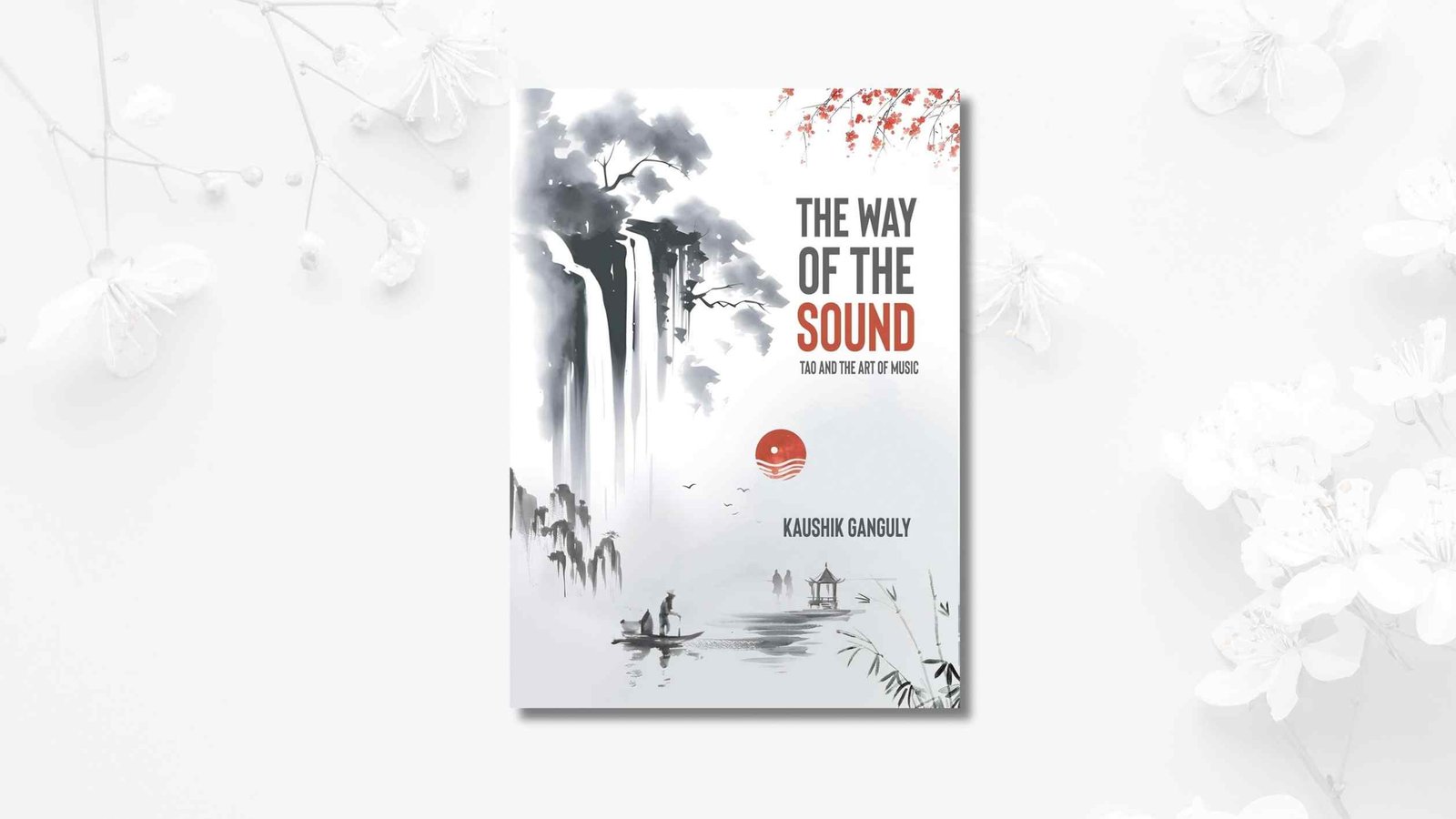
The Way of the Sound: Tao and the Art of Music is less a conventional book about music and more a reflective journey into the philosophy of sound, silence, and self-awareness. Drawing inspiration from Tao philosophy, Kaushik Ganguly offers a meditative exploration of creativity that feels both intimate and expansive.
At its core, the book challenges the modern obsession with perfection and performance. Instead of treating music as something to be mastered through rigid control, Ganguly presents it as something to be discovered through presence and flow. This shift in perspective is one of the book’s most compelling aspects. It encourages readers not just to create music, but to experience it as a natural extension of life itself.
Structured as a series of reflections, the book unfolds gently, allowing readers to pause and absorb each idea. These reflections often feel like quiet conversations rather than instructions. Ganguly writes not as an authority delivering rules, but as a fellow traveler sharing insights gathered over decades of musical and personal exploration. This tone makes the book approachable, especially for those who may feel intimidated by technical or academic discussions on music.
One of the strongest themes throughout the book is the relationship between sound and silence. Ganguly suggests that music does not begin with notes, but with the stillness from which those notes arise. This idea, rooted in Taoist thinking, adds a philosophical depth that elevates the book beyond a simple guide. It becomes a meditation on creativity, awareness, and the rhythm of life itself.
The practical insights included in the book are subtle rather than prescriptive. Instead of step-by-step techniques, readers are offered ways of thinking and perceiving. For musicians seeking technical improvement alone, this may feel abstract. However, for those looking to deepen their emotional and spiritual connection to music, the book offers meaningful guidance.
The language is simple yet poetic, reflecting the author’s dual identity as both artist and mentor. At times, the repetition of themes around stillness and flow may feel deliberate, reinforcing the contemplative nature of the work rather than driving a fast-paced narrative.
What ultimately makes The Way of the Sound stand out is its universality. While it speaks directly to singers, composers, and musicians, its message extends beyond music. It is about slowing down, listening deeply, and reconnecting with the essence of creation in any form.
In conclusion, The Way of the Sound: Tao and the Art of Music is a शांत, introspective read that invites readers to rethink not just how they create music, but how they experience life. It is best suited for those who are willing to pause, reflect, and explore the space where sound meets silence and where creativity becomes a way of being.