
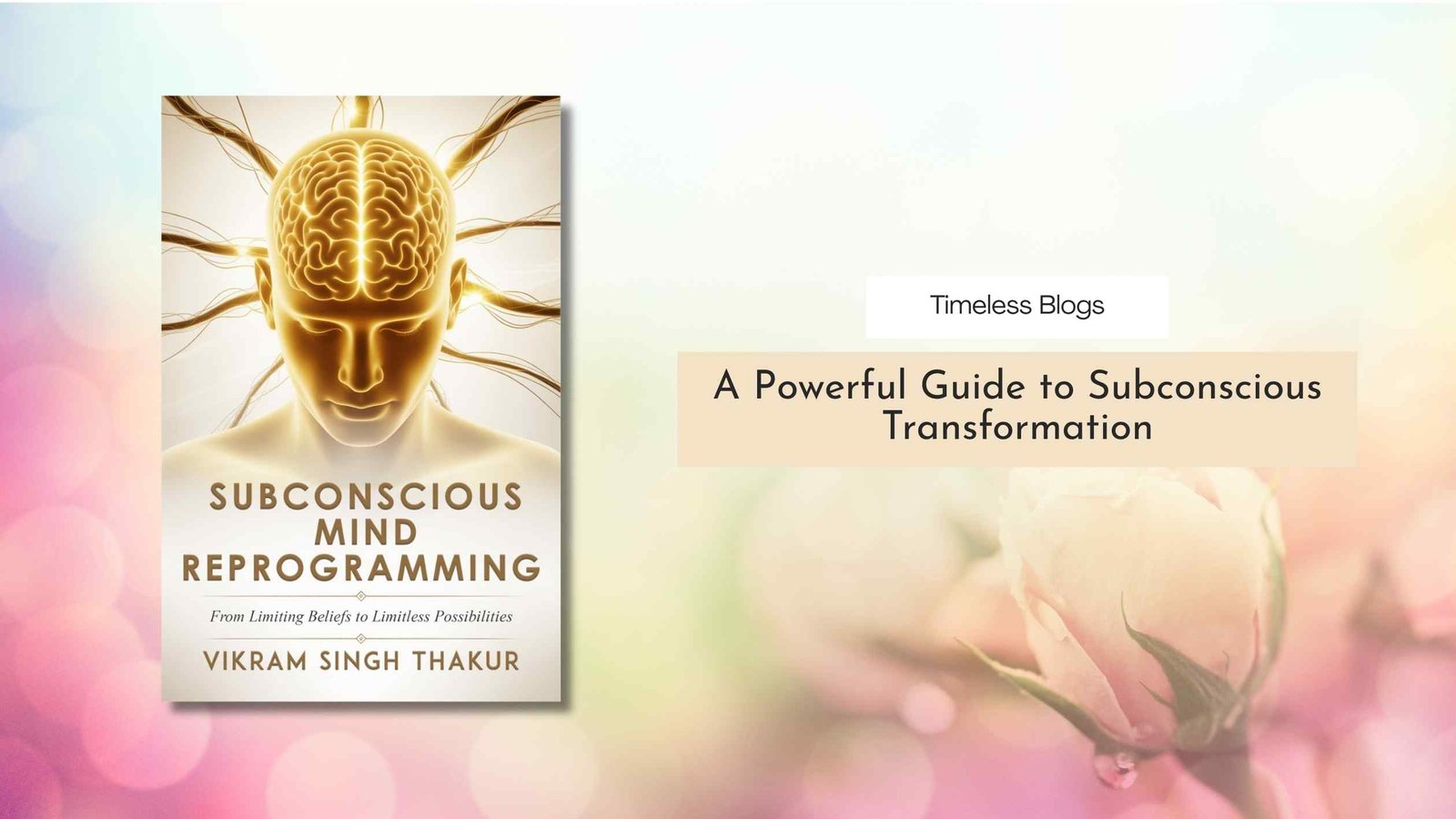
Subconscious Mind Reprogramming: From Limiting Beliefs to Limitless Possibilities positions itself as a transformative guide for readers who feel stuck in repetitive life patterns despite conscious effort. At its core, the book explores a powerful idea: that most of our behaviors, decisions, and outcomes are driven not by conscious thought, but by deeply embedded subconscious programming.
Thakur builds his narrative around the concept of the subconscious mind as an internal operating system. According to the book, while people focus heavily on goals and motivation, they often overlook the hidden beliefs shaping their reality. This framing is compelling and relatable, especially for readers who have experienced cycles of self-doubt, financial stagnation, or unfulfilling relationships.
One of the book’s strengths is its structured, action-oriented approach. Rather than remaining purely theoretical, it introduces readers to a range of techniques designed to “reprogram” the mind. These include affirmations, visualization, and self-hypnosis, all presented in a step-by-step format. The inclusion of frameworks like “Ask, Believe, Receive” gives the book a familiar self-help tone, while tools such as EFT tapping and PSYCH-K add a layer of contemporary alternative practices.
The discussion around neuroplasticity, the brain’s ability to change and adapt, provides a scientific anchor to the book’s claims. While the science is simplified for accessibility, it helps ground the central message that change is possible at any stage of life. However, readers looking for in-depth scientific rigor may find these explanations somewhat surface-level.
Another notable aspect is the book’s focus on practical application across key areas of life. Wealth, health, and relationships are treated as interconnected domains influenced by subconscious beliefs. This holistic perspective broadens the book’s appeal, making it relevant to readers with different personal goals.
That said, the book occasionally leans into overpromising. Phrases suggesting “effortless achievement” or rapid transformation may raise skepticism, especially for readers who prefer a more measured and evidence-based tone. While the techniques presented can be useful, real change often requires consistent effort, reflection, and sometimes external support beyond what a single framework can provide.
The writing style is clear, direct, and motivational, making the book easy to follow even for those new to self-development concepts. It maintains a coaching-like tone throughout, encouraging readers to take ownership of their mental patterns and actively work toward change.
In conclusion, Subconscious Mind Reprogramming is a practical and engaging introduction to mindset transformation. It offers a toolkit of techniques that can help readers become more aware of their internal beliefs and begin reshaping them. While some claims may feel ambitious, the core message remains valuable: lasting change begins from within, and understanding the subconscious mind is a powerful step toward creating a more intentional and fulfilling life.